On July 28, 1893, Sisters M. Antonio Egan, M. Corsini Dempsey, M. Veronica Payne and M. Sylvester Carver, former members of the Sisters of Mercy of Providence, Rhode Island, left Boston, bound for Sandy Point on the west coast of Newfoundland. Mrs. Henrietta Brownell, a friend of Sister M. Antonio and a benefactor of the mission, along with Bishop Michael Howley, Vicar Apostolic of Western Newfoundland, accompanied the band of missionaries to their new home.
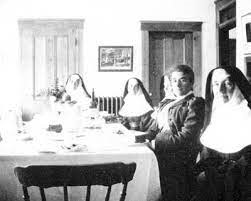 Upon arrival at Sandy Point, the sisters received an enthusiastic welcome from the people of Sandy point. The Evening Telegram of August 12, 1893 reported as follows:
As the steamer neared the wharf, a great crowd gathered and salvos
of guns were heard on every side. The line of procession from the wharf to the
Bishop’s house (where the nuns are to be temporarily located) was spanned
by several arches of evergreens … and decorated with wreaths, mottoes and
flags, among which the tri-color of France was particularly conspicuous.
From the Annals of St. Michael’s Convent, St. George’s we learn that once the festivities were over, “the sisters found themselves face to face with the stern difficulties of mission life in a new and poor country.” The annalist went on to say that “the contrast between the school environment of Sandy Point and that of Providence, Rhode Island can be better imagined than described …”
Although plagued with many difficulties and struggles in both community and ministry,the sisters remained steadfast in their dedication to the ideals of the mission they had undertaken so eagerly. In 1899 with the construction of the railway line in St. George’s, the sisters moved from Sandy Point to the new St. Michael’s Convent and school in St. George’s, where they were able to enjoy better accommodations and easier access to resources. The first two boarding students – Sarah Blanchard and Sarah Doyle from Codroy Valley – arrived at St. Michael’s Academy in 1900 to avail of the educational opportunities of the new school. Sarah Doyle entered the Sisters of Mercy in 1906, taking the religious name of Sister Mary Dominic. She was a great-aunt of Sister Sylvia Doyle.
Foundation of Sisters of Mercy, Sandy Point from Diane on Vimeo.
More stories documenting our Newfoundland Mercy Story can be read in “Archival Moments“
El 28 de julio de 1893, las Hermanas M. Antonio Egan, M. Corsini Dempsey, M. Veronica Payne y M. Sylvester Carver, antiguas miembros de las Hermanas de la Misericordia de Providence, Rhode Island, salieron de Boston con destino a Sandy Point, en la costa occidental de Terranova. La Sra. Henrietta Brownell, amiga de la Hermana M. Antonio y benefactora de la misión, junto con el Obispo Michael Howley, Vicario Apostólico de Terranova Occidental, acompañaron al grupo de misioneras a su nuevo hogar.
A su llegada a Sandy Point, las hermanas recibieron una entusiasta bienvenida por parte de los habitantes de Sandy Point. El Evening Telegram del 12 de agosto de 1893 informaba de lo siguiente:
Cuando el vapor se acercó al muelle, una gran multitud se reunió y salvas
de armas se oian por todas partes. La linea de la procesion desde el muelle hasta la
de la ciudad, y de la ciudad, y de la ciudad, y de la ciudad, y de la ciudad, y de la ciudad.
y decorada con coronas, lemas y banderas, entre las que destacaba la tricolor.
banderas, entre las que destacaba la tricolor de Francia.
En los Anales del Convento de San Miguel, St. George’s, nos enteramos de que, una vez terminadas las festividades, “las hermanas se encontraron cara a cara con las duras dificultades de la vida de misión en un país nuevo y pobre”. El annalista continuó diciendo que “el contraste entre el ambiente escolar de Sandy Point y el de Providence, Rhode Island puede ser mejor imaginado que descrito…”
Aunque plagadas de muchas dificultades y luchas tanto en la comunidad como en el ministerio,
las hermanas se mantuvieron firmes en su dedicación a los ideales de la misión que habían emprendido con tanto entusiasmo. En 1899, con la construcción de la línea de ferrocarril en St. George’s, las hermanas se trasladaron de Sandy Point al nuevo convento y colegio de St. Michael’s en St. George’s, donde pudieron disfrutar de mejores alojamientos y un acceso más fácil a los recursos. Las dos primeras alumnas internas – Sarah Blanchard y Sarah Doyle de Codroy Valley – llegaron a la Academia de San Miguel en 1900 para aprovechar las oportunidades educativas de la nueva escuela. Sarah Doyle ingresó en las Hermanas de la Misericordia en 1906, tomando el nombre religioso de Hermana Mary Dominic. Era tía abuela de la Hermana Sylvia Doyle.


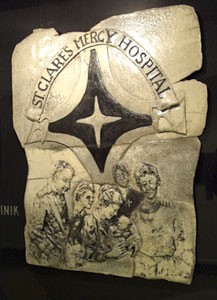 Leadership Team and the members of St. Clare’s Advisory Council made plans to celebrate Mercy Day at the hospital.
 have caused to Indigenous families and communities and to honor those who have been affected by these injustices. The annual observance of this day was one of the Calls to Action from the Truth and Reconciliation Commission of Canada.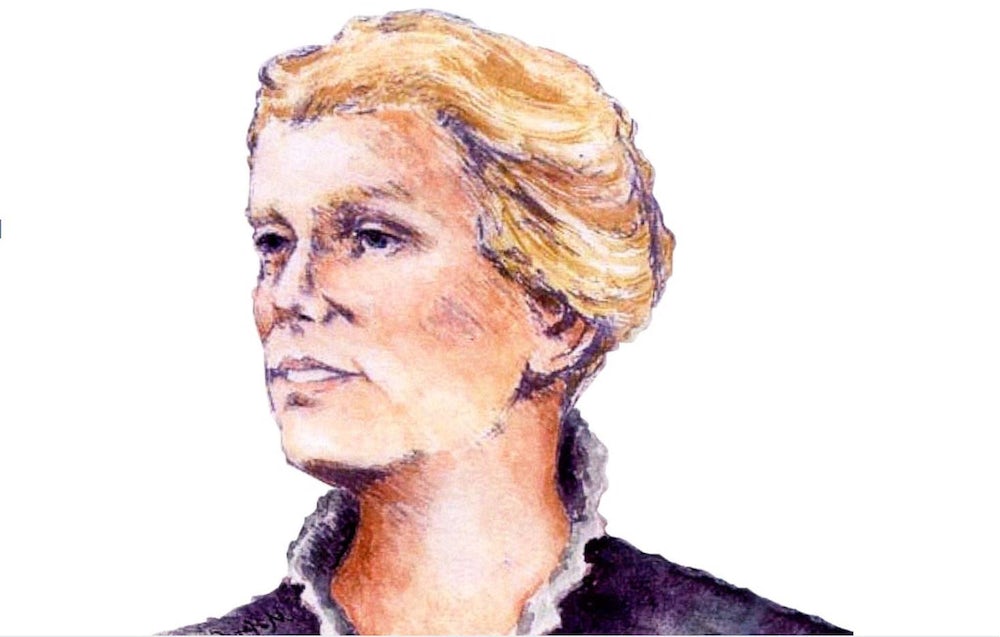
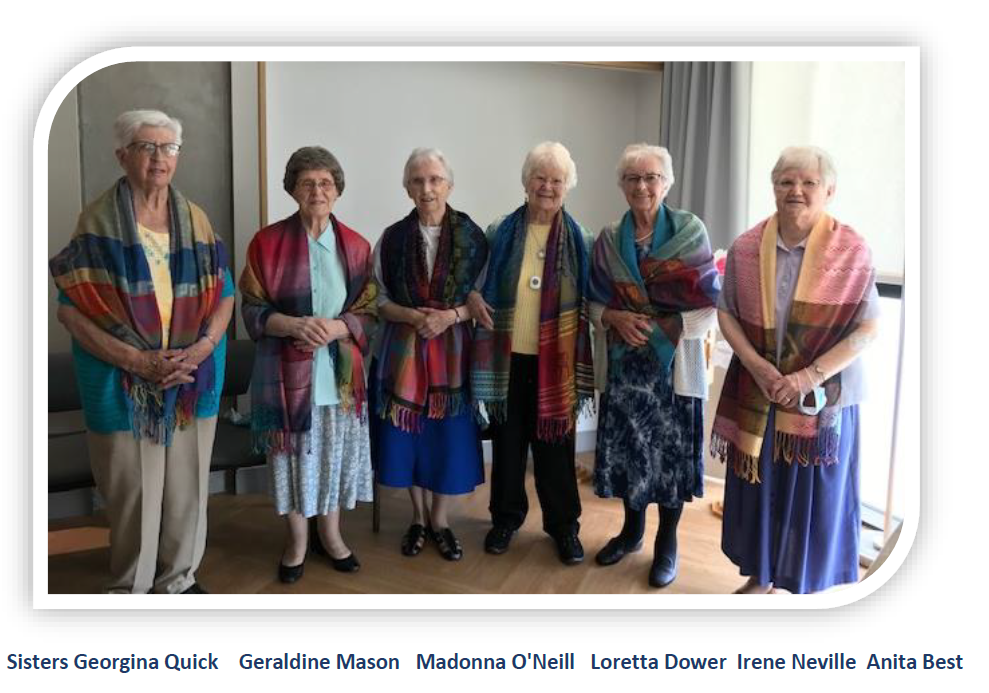


 The Congregation of the Sisters of Mercy had received word from Mary (Tarrant) Hodge early in August that the people of St. Lawrence, little St. Lawrence, Lawn and surrounding areas wanted to have a celebration to recognize the ministry of the Sisters of Mercy in those areas and to officially thank them. Three Sisters, Sister M. Rose Murphy, M. Xavier Tarahan, and M. Stanislaus Taylor, had arrived in St. Lawrence in 1871 and the last Sister to minister there was Sr. Lucia Walsh who left in 2009. Would the Sisters who had ministered, or who had come from there be able to attend the festivities planned on the weekend of October 20th and 21st, 2012, asked Mary? She insisted that the Congregational Leader HAD to be there! The Planning Committee would not entertain her absence but were willing to change the date of the event to suit her agenda. Elizabeth Davis was free to go on the 20th and 21st.
 Saturday, October 20th was the most beautiful day, weather-wise, that we had had all year! Sisters from St. John’s left very early in the morning when traffic was light and the moose had not yet ventured out from their night’s haunts. The sun shone its mightiest, the sky was cloudless, the environment was ecologically correct and when we drove off the Trans-Canada and travelled down the Peninsula highway the splendor of the gold, yellows, browns and sometimes reds of the autumn leaves was absolutely breathtaking. Those of us with digital cameras were kept busy trying to capture the beauty before us. This was particularly difficult especially if our driver had no intention of letting us out of the car to shoot the scenery!
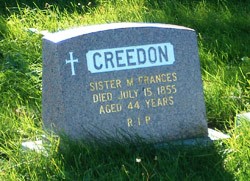 She died at the age of 44, having been professed as a Sister of Mercy for fourteen years. A woman of great fortitude, zeal for mission and commitment to the ideals of Mercy instilled in her by Catherine McAuley, Francis gave her all to the Newfoundland mission.