In Laudato Si’, Pope Francis emphasised the importance of a united, global response to the current ecological crisis. Yet dialogue and learning on integral ecology is often hindered by limited access to the academic publications on the subject, which are not affordable for many individuals and institutions in lower-income countries.
The Laudato Si’ Integral Ecology collection, of the Laudato Si’ Research Institute at the University of Oxford, seeks to address this problem by making open access a selection of key texts on integral ecology. The collection will provide a valuable resource for lay readers, students, and those undertaking more advanced academic study. Publications in the collection could also be read as part of a reading group, or an online course.
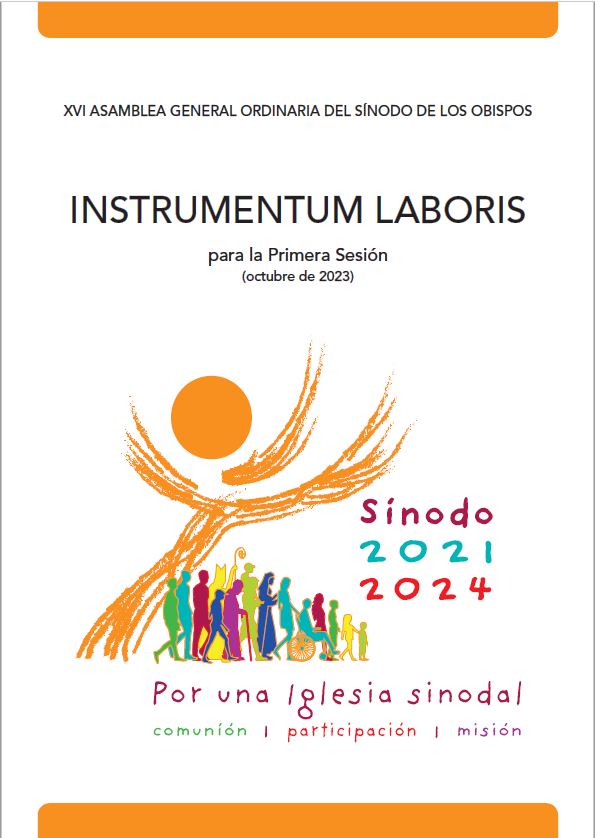
On June 20 the Vatican released Instrumentum Laboris, a working document in preparation for the General Assembly of the Synod of Bishops being held in October.
This document has two parts. Part One summarizes the insights gained from the listening sessions of the diocesan, national and continental levels, and outlines what a synodal church is and how it should proceed.
Part Two is comprised of a series of fifteen worksheets intended to guide the small group discussions at the assembly. The text outlines a “synodal method” of spirituality focused on listening to the Spirit and discerning the “signs of the times.” Among the topics for discussion are women deacons, priestly celibacy and LGBTQ outreach, which surfaced as priorities during the listening sessions.
Present at the October session will be delegates representing bishops, priests, religious and lay people from around the world. These delegates are not yet named. Although this session is an assembly of the Synod of Bishops, 21% of the voting delegates will not be bishops. 70 delegates will be chosen directly by Pope Francis from a list of 140 people selected by the leadership of this year’s continental assemblies.
Pope Francis recently announced that an ecumenical prayer service to entrust the work of the October session of the Synod to God will take place in St. Peter’s Square on September 30. The pope has also invited Father Timothy Radcliffe, former head of the Dominican Order to lead a three-day retreat for all participants at the beginning of the October session.
Download the F.A.Q. and Executive Summary of Instrumentum Laboris here
Download the Booklet PDF here or Download the Desktop PDF here or Download the Word file here
El 20 de junio, el Vaticano publicó Instrumentum Laboris, un documento de trabajo para preparar la Asamblea General del Sínodo de los Obispos que se celebrará en octubre.
Este documento consta de dos partes. La primera parte resume las conclusiones de las sesiones de escucha a nivel diocesano, nacional y continental, y esboza qué es una Iglesia sinodal y cómo debe proceder.
La segunda parte consta de una serie de quince hojas de trabajo destinadas a orientar los debates en pequeños grupos durante la asamblea. El texto esboza un “método sinodal” de espiritualidad centrado en la escucha del Espíritu y el discernimiento de los “signos de los tiempos”. Entre los temas de debate figuran las mujeres diáconos, el celibato sacerdotal y el acercamiento al colectivo LGBTQ, que surgieron como prioridades durante las sesiones de escucha.
En la sesión de octubre estarán presentes delegados que representan a obispos, sacerdotes, religiosos y laicos de todo el mundo. Estos delegados aún no han sido nombrados. Aunque esta sesión es una asamblea del Sínodo de los Obispos, el 21% de los delegados con derecho a voto no serán obispos. 70 delegados serán elegidos directamente por el Papa Francisco de una lista de 140 personas seleccionadas por la dirección de las asambleas continentales de este año.
El Papa Francisco anunció recientemente que el 30 de septiembre tendrá lugar en la Plaza de San Pedro un servicio ecuménico de oración para encomendar a Dios los trabajos de la sesión de octubre del Sínodo. El Papa también ha invitado al padre Timothy Radcliffe, antiguo jefe de la Orden Dominicana, a dirigir un retiro de tres días para todos los participantes al comienzo de la sesión de octubre.
Descargue las preguntas frecuentes y el resumen del Instrumentum Laboris aquí
Descargue el folleto en PDF aquí
o Descargar el PDF de escritorio aquí
o Descargue el archivo Word aquí
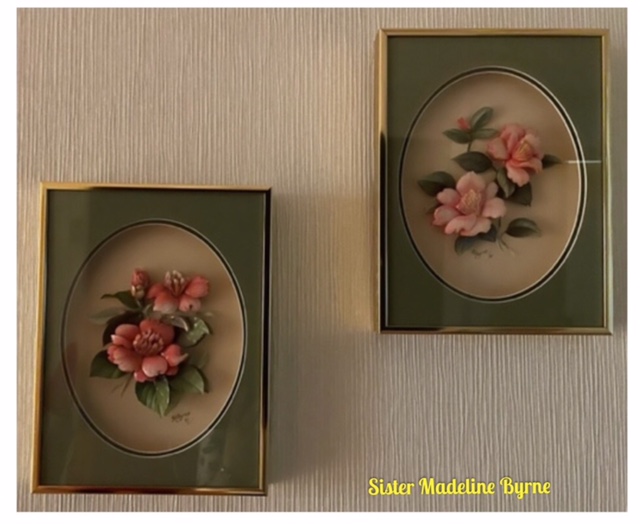
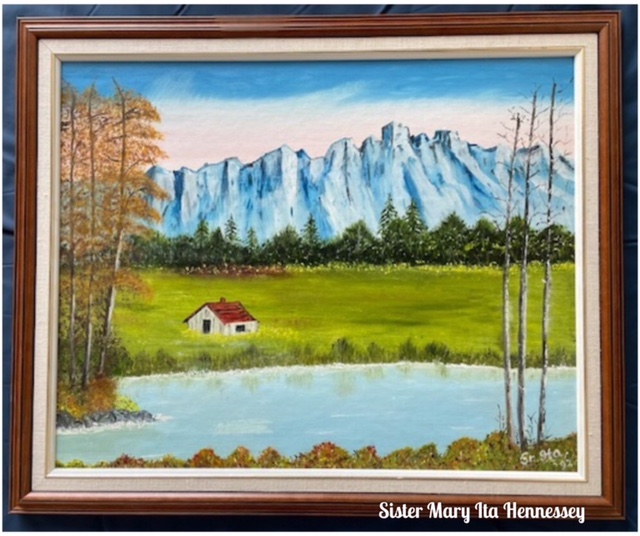
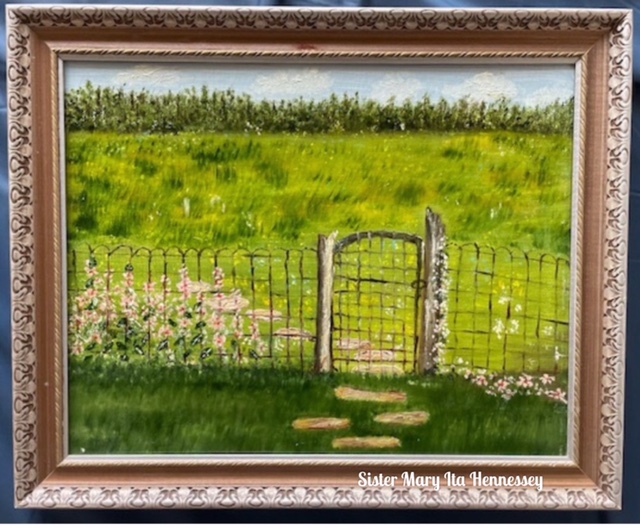
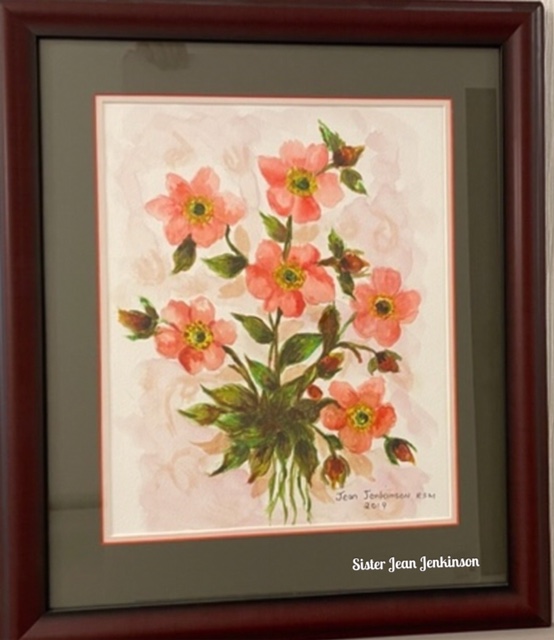
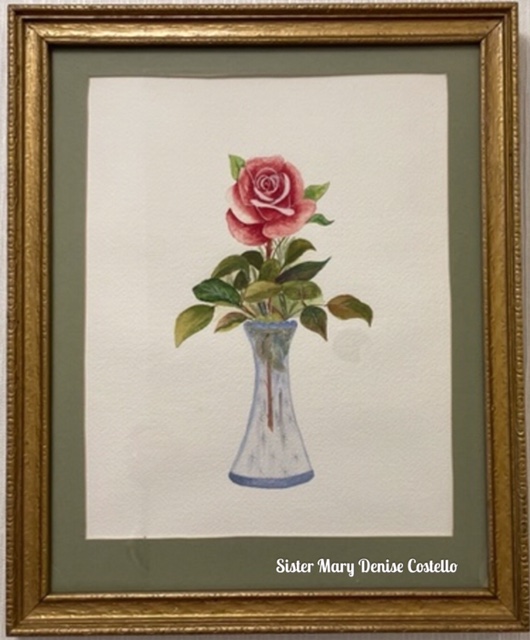
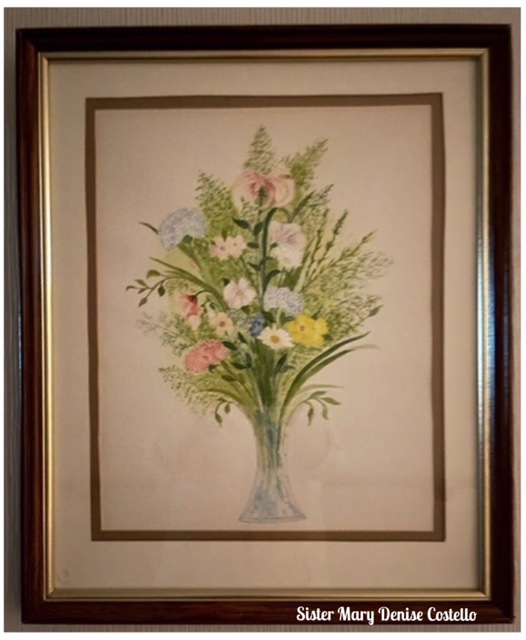
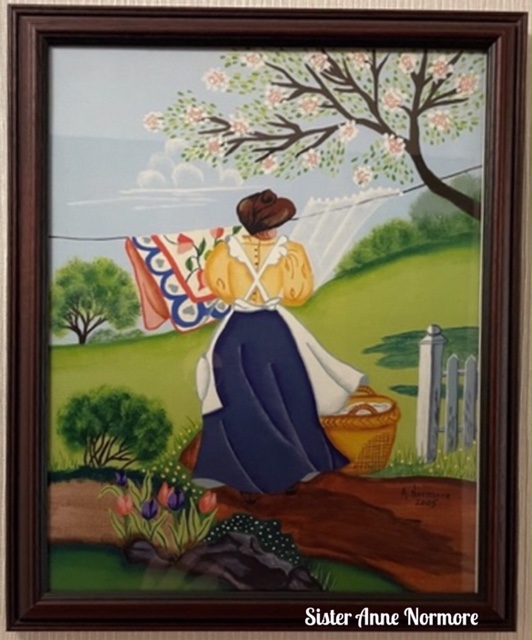
These artworks by the Sisters can be found hanging on the corridors of the Residence at Littledale. Enjoy browsing this online gallery and spending time with your favourite landscape, floral arrangement, or scene.
Estas obras de arte de las Hermanas se encuentran colgadas en los pasillos de la Residencia de Littledale. Disfrute navegando por esta galería en línea y pase un rato con su paisaje, arreglo floral o escena favoritos.
God you are our refuge and our strength, an ever present help in time of trouble (Ps 46.1)
Join us in prayer for the safety and security of the five people on the OceanGate expedition to the Titanic who set out from St John’s on Sunday morning on the adventure of a lifetime.
Pray for strength for their families and friends, their local communities and networks, all of whom are enormously affected by the disappearance of their loved ones undersea.
Pray for those involved in the massive search and rescue operation who are doing everything they can to bring those on board safely home.
Dios, tú eres nuestro refugio y nuestra fortaleza, una ayuda siempre presente en tiempos de angustia(Sal 46.1)
Únase a nosotros en la oración por la seguridad de las cinco personas de la expedición OceanGate al Titanic que partieron de St John’s el domingo por la mañana en la aventura de su vida.
Oremos por la fortaleza de sus familias y amigos, sus comunidades locales y redes, todos ellos enormemente afectados por la desaparición de sus seres queridos bajo el mar.
Rezad por los participantes en la operación de búsqueda y rescate, que están haciendo todo lo posible para que los que están a bordo regresen sanos y salvos a casa.
Sister Madeline Byrne has been contributing to the artistic atmosphere at McAuley Convent for the past few years. Every Thursday afternoon she guides and encourages some of the senior sisters to produce painting, cards and other creative works.
Madeline describes herself as “a budding Artist”, despite the fact that many of her beautiful paintings may be found in our convents and residences or on the walls in people’s homes!
Some of the Sisters at McAuley expressed an interest in painting. So, every week they take out their brushes and get to work. While there are no “Monets or Picassos” they all enjoy the time together. When a piece is finished they marvel at what they are able to produce. All are delighted to have their work published by displaying it on a special wall in the Convent. There have even been in-house sales of their cards!
Sor Madeline Byrne ha contribuido al ambiente artístico del convento de McAuley durante los últimos años. Todos los jueves por la tarde guía y anima a algunas de las hermanas mayores a realizar pinturas, tarjetas y otros trabajos creativos.
Madeline se describe a sí misma como “una artista en ciernes”, a pesar de que muchos de sus hermosos cuadros se pueden encontrar en nuestros conventos y residencias o en las paredes de las casas de la gente.
Algunas de las Hermanas de McAuley expresaron su interés por la pintura. Así que cada semana sacan sus pinceles y se ponen manos a la obra. Aunque no hay “Monets o Picassos”, todas disfrutan del tiempo que pasan juntas. Cuando terminan una obra, se maravillan de lo que son capaces de hacer. Todos están encantados de que se publiquen sus obras, que exponen en una pared especial del convento. Incluso se han vendido internamente sus tarjetas.
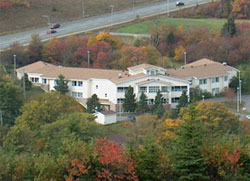
McAuley Convent was opened in 1991 to provide a residence and center of care of the sick and infirm members of our congregation.
This modern and tastefully decorated building is built into the hillside of the Littledale property in the Waterford River valley in the west end of St. John’s. Every floor of the three-storey building has a ground level entrance. The center courtyard, which can be viewed from every room on the back of the building and which can be entered from the community room, is lavishly landscaped with flowers, shrubs and trees. Sisters can safely walk around the garden or sit in the swing chairs or other chairs that are provided. A statue of Mary stands at the centre of the garden and the Stations of the Cross are located on one side of the garden.
There are three other smaller community rooms for different groups of sisters, including one for the sisters who are part of the staff at McAuley Convent. In addition to this there are two large dining rooms, individual bedrooms, a physio-therapy room and a few multi-use rooms for arts and crafts, games, meetings or solitude. A very large kitchen, storage and laundry take up the lowest floor of the building. The crown of the building is the beautiful chapel with a wall of windows that look out to the Southside Hills of the Waterford Valley. The Sisters are blessed to have mass celebrated every morning and those who cannot go to the chapel may hear the celebration in their bedrooms.
Besides being the residence for sisters who need care in their old age, McAuley is a place of recuperation for sisters who have surgery or injury that requires more care than is available in their own convent. Our sisters are given the best of care and receive wonderful attentiveness from the many lay staff and sisters. Some have lived to see 100 years or more. When a sister is dying the sisters who are able, keep day and night vigil. Sisters are prayed into God’s kingdom at the end of their lives.
McAuley Convent is a place of care, safety and nurturing; it is a place of faith, joy, freedom and celebration. It is a powerhouse of prayer for the many needs of individuals and for our world.
McAuley Convent closed in October, 2020 when the sisters needing care moved to the Residence at Littledale, a new facility owed and operated by a local businessman Fred Cahill, on the Littledale Property where we are renting the entire third floor.
El Convento McAuley se inauguró en 1991 para proporcionar una residencia y un centro de atención a los miembros enfermos y desvalidos de nuestra congregación.
Este edificio moderno y decorado con gusto está construido en la ladera de la propiedad de Littledale, en el valle del río Waterford, en el extremo oeste de St. Cada planta del edificio de tres pisos tiene una entrada a nivel del suelo. El patio central, que puede verse desde todas las habitaciones de la parte trasera del edificio y al que se accede desde la sala comunitaria, está profusamente ajardinado con flores, arbustos y árboles. Las hermanas pueden pasear sin peligro por el jardín o sentarse en los columpios u otras sillas que se proporcionan. Una estatua de María se alza en el centro del jardín y el Vía Crucis está situado en uno de sus lados.
Hay otras tres salas comunitarias más pequeñas para diferentes grupos de hermanas, incluida una para las hermanas que forman parte del personal del convento de McAuley. Además, hay dos grandes comedores, dormitorios individuales, una sala de fisioterapia y algunas salas multiusos para manualidades, juegos, reuniones o soledad. Una cocina muy grande, el almacén y la lavandería ocupan la planta más baja del edificio. La corona del edificio es la hermosa capilla con una pared de ventanas que dan a las colinas del sur del valle de Waterford. Las hermanas tienen la suerte de que se celebre misa todas las mañanas y las que no pueden ir a la capilla pueden oír la celebración en sus habitaciones.
Además de ser la residencia de las hermanas que necesitan cuidados en su vejez, McAuley es un lugar de recuperación para las hermanas que han sufrido una intervención quirúrgica o una lesión que requiere más cuidados de los que pueden recibir en su propio convento. Nuestras hermanas reciben los mejores cuidados y una atención maravillosa por parte del numeroso personal laico y de las hermanas. Algunas han vivido 100 años o más. Cuando una hermana se está muriendo, las hermanas que pueden velan día y noche. Al final de sus vidas, se reza por las hermanas para que entren en el reino de Dios.
El convento de McAuley es un lugar de cuidado, seguridad y crianza; es un lugar de fe, alegría, libertad y celebración. Es un centro de oración por las muchas necesidades de las personas y de nuestro mundo.
El Convento McAuley cerró en octubre de 2020, cuando las hermanas que necesitaban cuidados se trasladaron a la Residencia de Littledale, una nueva instalación propiedad de Fred Cahill, un empresario local, que la gestiona, en la propiedad Littledale donde estamos alquilando todo el tercer piso.
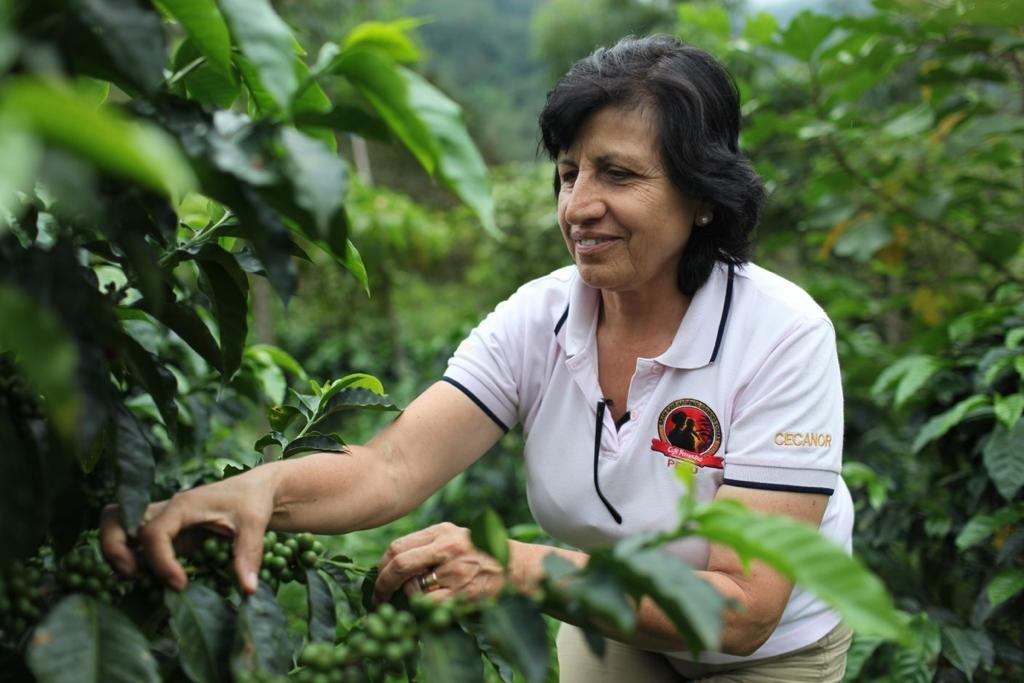
Peruvian sociologist Isabel Uriarte Latorre ignited the Café Femenino movement, which has helped liberate women landowners by paying them directly for their work
Isabel Uriarte Latorre. Source: Cafe Femenino Foundation
“From little coffee beans, a co-operative movement has grown that now supports the sisterhood by ensuring its 6,000 strong female farmers across nine countries get paid into their own hands
The movement, called Café Femenino, gives coffee lovers a fresh reason to enjoy a cup of their favourite brew, for the brand you choose can empower the people who grow it too.
It’s a fact that has preoccupied social entrepreneur Isabel Uriarte Latorre since her earliest days as a sociology student in the 1970s in Lambayeque, a coastal city in northern Peru.
As the daughter of farmers who had migrated to the city in search of a better life, she developed an interest in the lives of women in the South American country’s rural communities. Much of what she learned upset her: While women in these agrarian regions were responsible for picking the beans, they existed at the foothills of what is a mountainous global industry…”
Cafe Fermino coffee is available for purchase in Canada (Alberta, British Columbia, Ontario, Quebec), USA, UK and Australia. Locations are listed online here
La socióloga peruana Isabel Uriarte Latorre impulsó el movimiento Café Femenino, que ha contribuido a liberar a las mujeres propietarias de tierras pagándoles directamente por su trabajo.
Stock photo
“A partir de pequeños granos de café, ha crecido un movimiento cooperativo que ahora apoya a la hermandad garantizando que sus 6.000 fuertes agricultoras de nueve países reciban el pago en sus propias manos”.
El movimiento, llamado Café Femenino, ofrece a los amantes del café una nueva razón para disfrutar de su infusión favorita, ya que la marca que elijas puede empoderar también a las personas que lo cultivan.
Es un hecho que ha preocupado a la empresaria social Isabel Uriarte Latorre desde sus primeros días como estudiante de sociología en los años setenta en Lambayeque, una ciudad costera del norte de Perú.
Hija de campesinos que habían emigrado a la ciudad en busca de una vida mejor, se interesó por la vida de las mujeres en las comunidades rurales del país sudamericano. Gran parte de lo que aprendió le disgustó: Aunque las mujeres de estas regiones agrarias eran las encargadas de recoger las judías, existían en las estribaciones de lo que es una industria global montañosa…”
Lea la historia completa aquí. Fuente: Irish Times
El café de Cafe Fermino está a la venta en Canadá (Alberta, Columbia Británica, Ontario, Quebec), Estados Unidos, Reino Unido y Australia. Las ubicaciones figuran en línea aquí
Maria Nugent had the unique distinction of being the first Presentation postulant and the first Mercy postulant in Newfoundland and consequently in North America.
compassion
Known to us as Sister Mary Joseph, Maria died on this day in 1847, just five years after the founding of the Mercy mission in Newfoundland. Maria lived with her brother, Valentine Nugent and his family who had come to St. John’s from Ireland in 1833 at the invitation of Bishop Fleming.
Marianne Creedon, whose sister was Nugent’s wife, lived in the same household until she left for Ireland in 1839. For a number of years Maria and Marianne taught together at a school for young ladies on Water Street.
In 1834 Maria was admitted to the novitiate of the Presentation Sisters at Cathedral Square but later returned home because of ill health. Shortly after Marianne, now Sister Mary Francis, and her two companions came to St. John’s to begin their mission, Maria asked to join them. Bishop Fleming deemed her Presentation novitiate as fulfilling the requirements for entrance to the Mercy Order and she was professed as Sister Mary Joseph on March 25, 1843 in a ceremony held at the Presentation Convent.
Sister M. Joseph taught in the first Mercy school and was Sister M. Francis’ only companion when Sisters Ursula and Rose returned home in November of 1843. The two women, connected by bonds of family and love for the mission, faithfully carried out the responsibilities of school and visitation day after day in all kinds of weathers. An article in The Newfoundlander on June 24, 1847 gives a sense of their devotion and commitment:
Ever and anon might these two pious Sisters have been seen, before or after the toils of the day at school, treading through our snows and pelted by our sleet to smooth the pillow of the death-bed of the afflicted, and pouring into the ear of the infected words of promise and hope, either in the wretched hovels of the poor or in the hospital.
In June of 1847 when a typhus epidemic broke out in St. John’s, Sisters M. Francis and M. Joseph closed school and devoted themselves totally to those afflicted with the dreaded disease, visiting and caring for them in their homes and at St. John’s Hospital, located in present-day Victoria Park area. It was while Sister M. Joseph was caring for a young seaman who was dying from typhus that she herself became infected. After two weeks of intense suffering, she died on June 17 at the age of 48. She is buried with other victims of the disease on land which is now occupied by the Kirk.
We are the proud and grateful inheritors of this wonderful tradition of trust in God’s Providence, compassionate care and faithful service.
Maria Nugent tuvo la distinción única de ser la primera postulante de la Presentación y la primera postulante de la Misericordia en Terranova y, por consiguiente, en América del Norte.
The word “Mercy” written in isolated vintage wooden letterpress type on a white background.
Conocida por nosotros como la Hermana Mary Joseph, María murió un día como hoy en 1847, sólo cinco años después de la fundación de la misión de la Misericordia en Terranova. María vivía con su hermano, Valentine Nugent y su familia, que habían llegado a San Juan desde Irlanda en 1833 invitados por el obispo Fleming.
Marianne Creedon, cuya hermana era la esposa de Nugent, vivió en la misma casa hasta que se marchó a Irlanda en 1839. Durante varios años Maria y Marianne enseñaron juntas en una escuela para señoritas en Water Street.
En 1834, María ingresó en el noviciado de las Hermanas de la Presentación en Cathedral Square, pero más tarde regresó a casa por motivos de salud. Poco después de que Marianne, ahora hermana Mary Francis, y sus dos compañeras llegaran a St. John’s para comenzar su misión, María pidió unirse a ellas. El Obispo Fleming consideró que su noviciado en la Presentación cumplía los requisitos para entrar en la Orden de la Merced y profesó como Hermana Mary Joseph el 25 de marzo de 1843 en una ceremonia celebrada en el Convento de la Presentación.
La Hermana M. Joseph enseñó en la primera escuela de la Misericordia y fue la única compañera de la Hermana M. Francis cuando las Hermanas Ursula y Rose regresaron a casa en noviembre de 1843. Las dos mujeres, unidas por lazos de familia y amor a la misión, cumplieron fielmente con las responsabilidades de la escuela y la visitación día tras día en todo tipo de climas. Un artículo publicado en The Newfoundlander el 24 de junio de 1847 da una idea de su devoción y compromiso:
Estas dos piadosas hermanas han sido vistas una y otra vez, antes o después de los trabajos del día en la escuela, atravesando nuestras nieves y aguanieve para alisar la almohada del lecho de muerte de los afligidos. lecho de muerte de los afligidos, y vertiendo en el oído de los infectados palabras de promesa y esperanza, ya sea en las míseras de los pobres o en el hospital.
En junio de 1847, cuando estalló una epidemia de tifus en St. John’s, las hermanas M. Francis y M. Joseph cerraron la escuela y se dedicaron por completo a los afectados por la temida enfermedad, visitándolos y cuidándolos en sus casas y en el hospital de St. John’s, situado en la actual zona de Victoria Park. Fue mientras la hermana M. Joseph cuidaba a un joven marinero que se estaba muriendo de tifus cuando ella misma se infectó. Tras dos semanas de intenso sufrimiento, murió el 17 de junio a la edad de 48 años. Está enterrada, junto con otras víctimas de la enfermedad, en el terreno que hoy ocupa el Kirk.
Somos los orgullosos y agradecidos herederos de esta maravillosa tradición de confianza en la Providencia de Dios, cuidado compasivo y servicio fiel.
We invite you to pray with us for our sisters and for the people of Huarmey and the whole Ancash region of western Peru who are experiencing yet another serious threat to health and safety
Dengue fever continues to rage in many parts of Peru. The country has extended its health emergency as it faces a record outbreak of the disease. So far there have been over 73, 000 cases and eighty deaths. In the Ancash region where Huarmey is located, there has been a considerable increase in the number of infections over the past month.
As we mark World Environment Day (5 June) we are all very aware of the devastating effects of climate change all over our world, but these last couple of years, we have been experiencing some of these terrible effects first-hand.
Several of our sisters have relatives in the Halifax area, where wildfires have been raging for days, destroying land and property. Some have already been evacuated; others are on the alert, ready to move, if and when necessary.
Join us in prayer for all in Nova Scotia who are affected by this terrible circumstance, for their safety and for that of the firefighters. We are happy that our province has sent help to our neighbors in these difficult times.
Os invitamos a rezar con nosotros por nuestras hermanas y por la población de Huarmey y de toda la región de Ancash, en el oeste de Perú, que están sufriendo otra grave amenaza para la salud y la seguridad
El dengue sigue haciendo estragos en muchas partes de Perú. El país ha ampliado su emergencia sanitaria al enfrentarse a un brote récord de la enfermedad. Hasta el momento se han registrado más de 73.000 casos y ochenta muertes. En la región de Ancash, donde se encuentra Huarmey, el número de contagios ha aumentado considerablemente en el último mes.
Con motivo del Día Mundial del Medio Ambiente (5 de junio), todos somos muy conscientes de los efectos devastadores del cambio climático en todo el mundo, pero estos dos últimos años, hemos estado experimentando algunos de estos terribles efectos de primera mano.
Varias de nuestras hermanas tienen parientes en la zona de Halifax, donde los incendios forestales llevan días arrasando tierras y propiedades. Algunos ya han sido evacuados; otros están en alerta, listos para desplazarse, si es necesario.
Únanse a nosotros en la oración por todos los habitantes de Nueva Escocia afectados por esta terrible circunstancia, por su seguridad y por la de los bomberos. Nos alegramos de que nuestra provincia haya enviado ayuda a nuestros vecinos en estos momentos difíciles.
Publica tu oración en nuestro espacio sagrado aquí
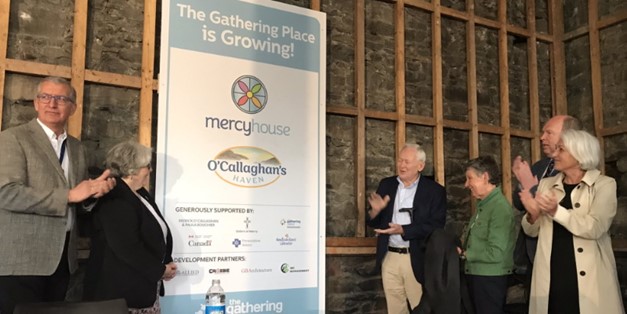
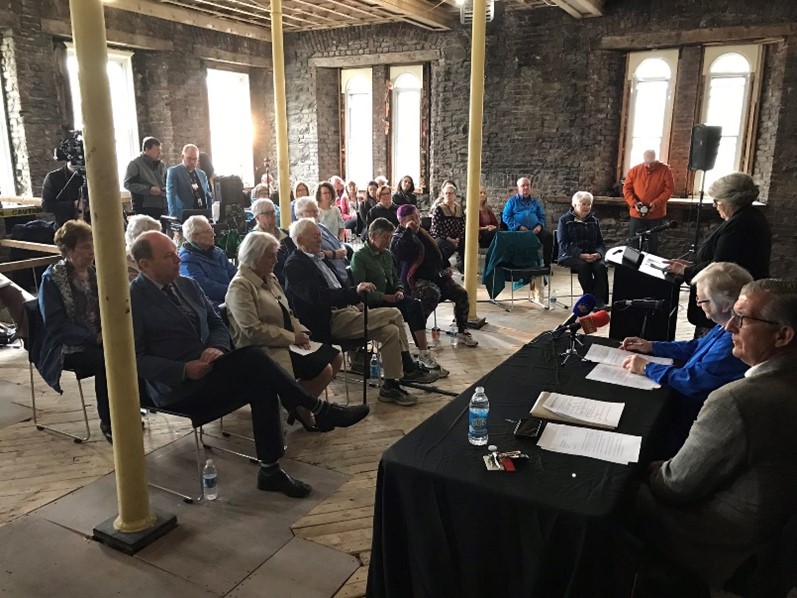
Ceremony to announce the transformation of Mercy Convent
On May 31, 2023 a simple, yet profound event took place in the bare-bone space of the former Mercy Convent in St. John’s, NL. The Institute of the Sisters of Mercy, a Roman Catholic order of women religious, was founded in Dublin in 1831 by Catherine McAuley. Three sisters of Mercy travelled from Dublin in 1842 to found a convent in St. John’s. For about 15 years the sisters lived in a wooden structure built as a convent by Bishop Fleming who invited sisters to come to Newfoundland.
L-r: Paul Davis, Executive Director, The Gathering Place; Sr. Diane Smyth, Congregational Leader Sisters of Mercy; Patrick O’Callaghan and Paula Boucher, Donors; John Abbott, MHA and Joanne Thompson, MP
The Mercy Convent structure today was constructed in 1857 and served as a convent up to 2021. Over the past months the building has been stripped to its foundational structure. Olympic Construction has begun the renovation to the building to transform it into a shelter and supportive housing structure that will accommodate 90 persons in need of temporary and transitional housing. It is hope that the project will be completed by June 2024. Day to day support services will be offered by The Gathering Place.
The Sisters of Mercy and the Presentation Sisters, as well as church parishes in the area, Roman Catholic, Anglican, United Church of Canada, and Presbyterian as well as other groups concerned about hunger, health, housing and social isolation of a large population in the central area of St. John’s joined forces in the early 1990s to envision a centre to serve the population in need of care and services. The Gathering Place opened in 1994 with basic food provision and social centre located in a vacant school building that had been refreshed for this new purpose. Since that time space and services and those seeking help increased exponentially and continue to do so. Now permanent supportive housing in this renovation project has been added to the services of The Gathering Place.
See below Mercy Convent Before and After Renovation as Shelter and transitional Housing (17:29)
Ceremonia para anunciar la transformación del Convento de la Misericordia
El 31 de mayo de 2023 tuvo lugar un acontecimiento sencillo, pero profundo, en el espacio desnudo del antiguo Convento de la Misericordia de St. El Instituto de las Hermanas de la Misericordia, una orden católica romana de religiosas, fue fundado en Dublín en 1831 por Catalina McAuley. Tres hermanas de la Misericordia viajaron desde Dublín en 1842 para fundar un convento en San Juan. Durante unos 15 años, las hermanas vivieron en una estructura de madera construida como convento por el obispo Fleming, que invitó a las hermanas a venir a Terranova.
La Hermana Diane Smyth ofrece saludos y una oración de bendición en la ceremonia celebrada en parte del espacio desnudo del antiguo convento.
La estructura actual del Convento de la Misericordia se construyó en 1857 y sirvió como convento hasta 2021. En los últimos meses, el edificio ha sido despojado de su estructura fundacional. Olympic Construction ha comenzado la renovación del edificio para transformarlo en una estructura de refugio y vivienda de apoyo que acogerá a 90 personas necesitadas de alojamiento temporal y transitorio. Se espera que el proyecto esté terminado en junio de 2024. Los servicios de apoyo diario serán ofrecidos por The Gathering Place.
Las Hermanas de la Misericordia y las Hermanas de la Presentación, así como las parroquias de la zona, católica romana, anglicana, de la Iglesia Unida de Canadá y presbiteriana, además de otros grupos preocupados por el hambre, la salud, la vivienda y el aislamiento social de una amplia población de la zona central de St. John’s, unieron sus fuerzas a principios de los años noventa para idear un centro que atendiera a la población necesitada de cuidados y servicios. El Gathering Place abrió sus puertas en 1994 con un servicio de alimentación básica y un centro social ubicado en un edificio escolar vacío que había sido acondicionado para este nuevo fin. Desde entonces, el espacio y los servicios y las personas que buscan ayuda han aumentado exponencialmente y siguen haciéndolo. Ahora, a los servicios de The Gathering Place se han añadido viviendas permanentes de apoyo en este proyecto de renovación.


 ecology is often hindered by limited access to the academic publications on the subject, which are not affordable for many individuals and institutions in lower-income countries.
 On June 20 the Vatican released
  Este documento consta de dos partes. La primera parte resume las conclusiones de las sesiones de escucha a nivel diocesano, nacional y continental, y esboza qué es una Iglesia sinodal y cómo debe proceder.





 Join us in prayer for the safety and security of the five people on the OceanGate expedition to the Titanic who set out from St John’s on Sunday morning on the adventure of a lifetime.



 Dengue fever continues to rage in many parts of Peru. The country has extended its health emergency as it faces a record outbreak of the disease. So far there have been over 73, 000 cases and eighty deaths. In the Ancash region where Huarmey is located, there has been a considerable increase in the number of infections over the past month.